

In every business interaction, there is a quiet moment where impressions are formed. It happens before proposals, before follow‑ups, before contracts. That moment often begins with something small: how you share your contact details. For decades, paper business cards carried that responsibility. Today, professionals are questioning whether they still do the job.
This is where the debate around digital business cards vs traditional business cards begins.
As networking becomes faster, more global, and more data‑driven, businesses are rethinking how they introduce themselves. Some hold onto the familiarity of paper. Others are embracing smarter, more flexible alternatives. This guide is designed to help you make that decision with clarity, context, and confidence.
We’ll explore digital business cards vs traditional pros and cons, compare costs, usability, sustainability, and real‑world performance, and explain how QR codes and NFC fit into the picture. By the end, you’ll know exactly which option supports your goals—and why more companies are choosing digital first.
What Are Traditional Business Cards?
Traditional business cards are printed physical cards that typically include a name, job title, company name, phone number, email address, and sometimes a logo or slogan. They rely on face‑to‑face exchange and have long been associated with professionalism and credibility.
Their strength lies in tangibility. The texture of the paper, the weight, the finish—all contribute to a sensory experience that can feel personal and intentional. For many years, this was the gold standard of networking.
But traditional cards also come with limitations. Space is finite. Information is static. Updates require reprinting. And once a card leaves your hand, you lose control over what happens next.
What Are Digital Business Cards?
Digital business cards are virtual profiles that allow professionals to share contact information and digital content instantly. They can be shared via link, QR code, NFC tap, email, or messaging apps. Unlike paper cards, they are dynamic, interactive, and updateable.
When people compare digital vs traditional business cards, the difference becomes clear quickly. Digital cards can include:
-
Contact details
-
Company websites
-
Calendars
-
Social profiles
-
Videos
-
Presentations
-
Lead capture forms
And they can be updated in real time—without reprinting or redistribution.
Digital Business Cards vs Traditional: Core Differences
Understanding the real difference between digital business cards vs traditional cards requires looking beyond appearance. It’s about how they perform in real business scenarios.
Reach and Sharing
Traditional cards are limited to physical encounters. If you forget them, run out, or attend a virtual meeting, they become irrelevant.
Digital cards, on the other hand, are always available. You can share them in person, online, during virtual calls, or even after the meeting has ended. This flexibility dramatically expands your reach.
Information Capacity
Paper cards force you to choose what to exclude.
Digital cards allow you to include everything that matters—without clutter. This is especially powerful for sales teams, consultants, and executives who need more than basic contact info.
Updates and Accuracy
One of the biggest challenges with traditional cards is obsolescence. A new role, new number, or new brand means starting over.
With digital cards, updates happen instantly. Everyone who has your card always sees the latest version.
Digital Business Cards vs Traditional Cost: A Practical Breakdown
Cost is often a deciding factor when businesses evaluate digital business cards vs traditional cost.
Traditional Card Costs
Traditional cards involve recurring expenses:
-
Design fees
-
Printing costs
-
Reprints for updates
-
Shipping and storage
Over time, these costs add up—especially for growing teams.
Digital Card Costs
Digital cards typically operate on a predictable subscription or one‑time setup model. There are no reprint costs, no waste, and no delays. For teams, centralized management reduces operational overhead significantly.
When comparing business cards or digital business, the long‑term cost efficiency of digital becomes difficult to ignore.
Digital Business Cards vs Traditional Pros and Cons
No solution is perfect for every situation. Let’s look at both sides clearly.
Traditional Business Cards: Pros
-
Tangible and familiar
-
No technology required
-
Can feel personal in formal settings
Traditional Business Cards: Cons
-
Easy to lose or discard
-
Static information
-
Reprinting costs
-
No tracking or analytics
Digital Business Cards: Pros
-
Instantly shareable
-
Always up to date
-
Interactive and multimedia
-
Eco‑friendly
-
Trackable engagement
Digital Business Cards: Cons
-
Requires smartphone access
-
Depends on user comfort with technology
This balanced view helps businesses decide based on context—not habit.
Digital Business Cards vs Traditional vs QR Code
Some professionals try to bridge the gap by adding QR codes to paper cards. This creates a hybrid model often discussed as digital business cards vs traditional vs QR code.
QR codes can extend a paper card’s functionality, but they don’t eliminate its limitations. You still face printing costs and static design. The QR code simply becomes a doorway to a digital experience.
True digital cards—especially NFC‑enabled ones—remove friction entirely. No scanning. No camera alignment. Just a tap or click.
This is why comparisons like digital business cards vs traditional qr code often favor fully digital solutions for scalability and user experience.
Sustainability and Brand Perception
Sustainability is no longer optional—it’s expected.
Traditional cards contribute to paper waste, ink usage, and transportation emissions. Digital cards align more naturally with modern sustainability goals, sending a strong message about innovation and responsibility.
For brands that care about perception, the choice between digital vs traditional business cards becomes part of a larger narrative about values.
Real‑World Use Cases
Sales Teams
Sales professionals benefit from digital cards that integrate with CRMs, capture leads, and track engagement. Follow‑ups become smarter and faster.
Enterprises
Large organizations need consistency, control, and scalability. Digital cards allow centralized branding, instant updates, and analytics across teams.
Startups and Founders
For growing businesses, flexibility matters. Digital cards evolve as fast as the company does—without added cost.
Making the Right Choice
Choosing between digital business cards vs traditional isn’t about abandoning the past—it’s about aligning with how business works today.
If your networking depends on speed, accuracy, sustainability, and measurable results, digital business cards offer a clear advantage. If you value tradition and tactile interaction, a hybrid approach may still play a role.
The key is intentionality.
Why Businesses Are Moving Forward
The future of networking is not static. It’s responsive, trackable, and human‑centered. Digital business cards don’t replace relationships—they strengthen them by removing friction and improving follow‑through.
As expectations rise, businesses that modernize how they connect stand out.
Final Thoughts—and Your Next Step
Your business card is often the first chapter of a longer conversation. It should reflect who you are today—not who you were when it was printed.
If you’re ready to move beyond limitations, reduce friction, and connect in a way that feels effortless and modern, digital business cards are the natural next step.
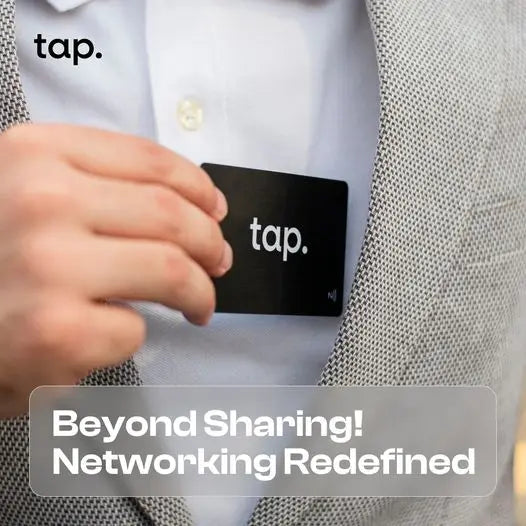
Tap helps businesses transform everyday introductions into meaningful connections—securely, seamlessly, and at scale.
FAQ
What is the main difference between digital business cards vs traditional business cards?
The main difference is flexibility. Traditional cards are physical and static, while digital business cards are shareable, updateable, and interactive in real time.
Are digital business cards better than traditional business cards?
For most modern businesses, yes. Digital cards offer easier sharing, instant updates, lower long-term cost, and engagement tracking.
Digital business cards vs traditional pros and cons: which should I choose?
Choose digital if you value scalability, analytics, and sustainability. Traditional cards may still work in highly formal or low-tech environments.
What about digital business cards vs traditional vs QR code cards?
QR codes improve traditional cards but don’t remove printing costs or static design. Fully digital cards provide a smoother, friction-free experience.
How does digital business cards vs traditional cost compare?
Traditional cards require recurring printing and reordering. Digital business cards usually have predictable, lower long-term costs.
Are digital business cards secure?
Yes. Modern digital business cards use secure links, controlled data sharing, and permission-based access.
Do digital business cards work on all smartphones?
Yes. They can be shared via link, QR code, or NFC, making them compatible with nearly all modern devices.
Is it better to use business cards or digital business cards for teams?
Digital business cards are better for teams because they allow centralized control, consistent branding, and real-time updates.


Leave a comment
This site is protected by hCaptcha and the hCaptcha Privacy Policy and Terms of Service apply.